

Introduction
With close to 5 billion people on social media worldwide, the channel itself was never the hard part. The hard part is having an actual plan behind what gets posted, why, and to whom, rather than a feed that fills up with whatever content was easiest to produce that week.
Without a strategy, social media becomes a stream of disconnected posts that might get likes but rarely move a business goal. With one, every post has a job to do, and every metric you check tells you whether it's doing it.
This guide covers how to build a social media strategy that actually connects to business outcomes: choosing the right platforms, structuring your content mix, using AI without losing authenticity, and making sure the website your content points to is actually ready to convert the traffic it sends.
Here's everything you need to know in under a minute (TL;DR)
- A social media strategy is a written plan covering goals, audience, platforms, content, and the metrics used to track progress, aligned with your broader digital marketing strategy
- Choosing 2-3 platforms deliberately, based on where your audience actually spends time, consistently outperforms a thin presence across every platform
- A content-mix formula (80-20, 50-30-20, or the rule of thirds) keeps a calendar from drifting toward whatever's easiest to produce, usually promotional content audiences tune out
- AI can speed up drafting, scheduling, and sentiment analysis, but audiences are quick to spot generic AI-generated content, so it should support a human-defined strategy, not generate one
- Engagement metrics (likes, comments, shares) and conversion metrics (CTR, conversion rate, cost per click) measure different things — track the ones tied to your actual goal
- A social strategy is only as effective as the website and systems it points traffic to
Table of contents
- Overview of an effective social media strategy
- How do you choose the right platforms for your business?
- Defining social media strategy
- Components of a social media strategy
- What's a practical content mix formula for social media?
- Developing a social media plan
- Implementing social media campaigns
- How is AI changing social media strategy?
- Measuring and analysing results
- Challenges and solutions
- Frequently asked questions
- The takeaway
A solid social media strategy has become increasingly vital with around 4.8 billion social media users worldwide - representing almost 60% of the global population.
Social media is highly cost-effective and offers a broad reach, when compared to traditional platforms.
Contrary to popular belief, you don't need a large budget to build a significant audience on social media, which is why it has become such a popular marketing tool.
Social media marketing refers to using social media platforms to promote your brand and sell your products or services. These platforms include popular sites like LinkedIn, Instagram, Facebook, and X (Twitter).
A well-defined social media strategy is a crucial component of modern digital marketing, as it can help increase brand awareness, drive website traffic, and generate leads.

Overview of an Effective Social Media Strategy
An effective social media strategy or plan should consider several key components and objectives. These include identifying your target audience, selecting the right social media platforms to focus on, creating engaging content, and measuring your success through analytics.
Identifying your target audience is crucial because it helps you tailor your content to their interests and needs, increasing the likelihood that they will engage with it. Choosing the right social media platforms to focus on is also essential, as each platform has its unique strengths and weaknesses. For example, LinkedIn is great for B2B marketing, while Instagram is ideal for visual content.
Creating engaging content is critical to capturing your audience's attention and keeping them interested. This can include a variety of content formats, such as images, videos, blog posts, and more. Finally, measuring your success through analytics is crucial to understanding what's working and not, so you can make adjustments as needed.
Overall, a well-thought-out social media strategy can be a powerful tool for growing your business and reaching new customers. A solid social media strategy can help businesses of any size establish their brand identity, connect with their target audience, and achieve their marketing goals. While some may believe that having a large marketing budget is necessary to build an audience and see results on social media, a successful social media strategy is not necessarily dependent on budget.
Instead, businesses can focus on developing a strategy that suits their unique needs and goals. This may include creating engaging content, utilising targeted advertising, and maintaining an active social media presence. Overall, a well-planned and executed social media strategy can help businesses to establish and grow their online presence, increase engagement with their audience, and drive measurable results.

How do you choose the right platforms for your business?
Not every platform deserves equal investment, and trying to maintain a strong presence on all of them usually means a weak presence on each. A practical approach is to give each platform you use a one-sentence mission statement, so every post has a clear job to do.
For example, a business might decide that LinkedIn is where it engages industry peers and attracts talent, Instagram is where it builds brand affinity with existing customers, and Facebook is where it runs paid campaigns to acquire new ones. If a platform doesn't have a clear mission statement, it's worth asking whether it deserves the ongoing time investment at all.
Platform choice should also follow audience, not assumption. LinkedIn remains the strongest fit for B2B audiences and industry authority content. Instagram and TikTok suit visually driven, younger-skewing audiences. Facebook still reaches the broadest, more mature demographic. Choosing two or three platforms deliberately, based on where your specific audience actually spends time, consistently outperforms a thin presence spread across every platform that exists.
Defining Social Media Strategy
A social media strategy is a written plan outlining your objectives on social media platforms. It includes your actions to achieve these goals and the measurements you will use to track your progress. Your social media marketing strategy should outline specific goals for all current and future accounts that align with your overarching digital marketing strategy. This involves strategically planning and executing social media activities to enhance brand presence and engagement.
Key benefits of having a social media strategy include:
- Increased brand awareness
- Enhance targeting across audiences
- Direct and increase web traffic
- Personalise content
- Generating higher quality leads
- Data you can analyse and measure
Creating a strategy will help you achieve your business goals and drive customer engagement. Another critical element of successfully selling on social media is establishing brand trust so users feel comfortable purchasing your products or services. Emphasising the sharing of customer reviews, testimonials, user-generated content, and product data is important, as is focusing on channels with the highest return on investment.
Components of a Social Media Strategy
A well-defined social media strategy is crucial for success in this field. With clear goals and a roadmap, starting well and achieving meaningful goals is easier. A comprehensive social media strategy should include several essential components.
Goals
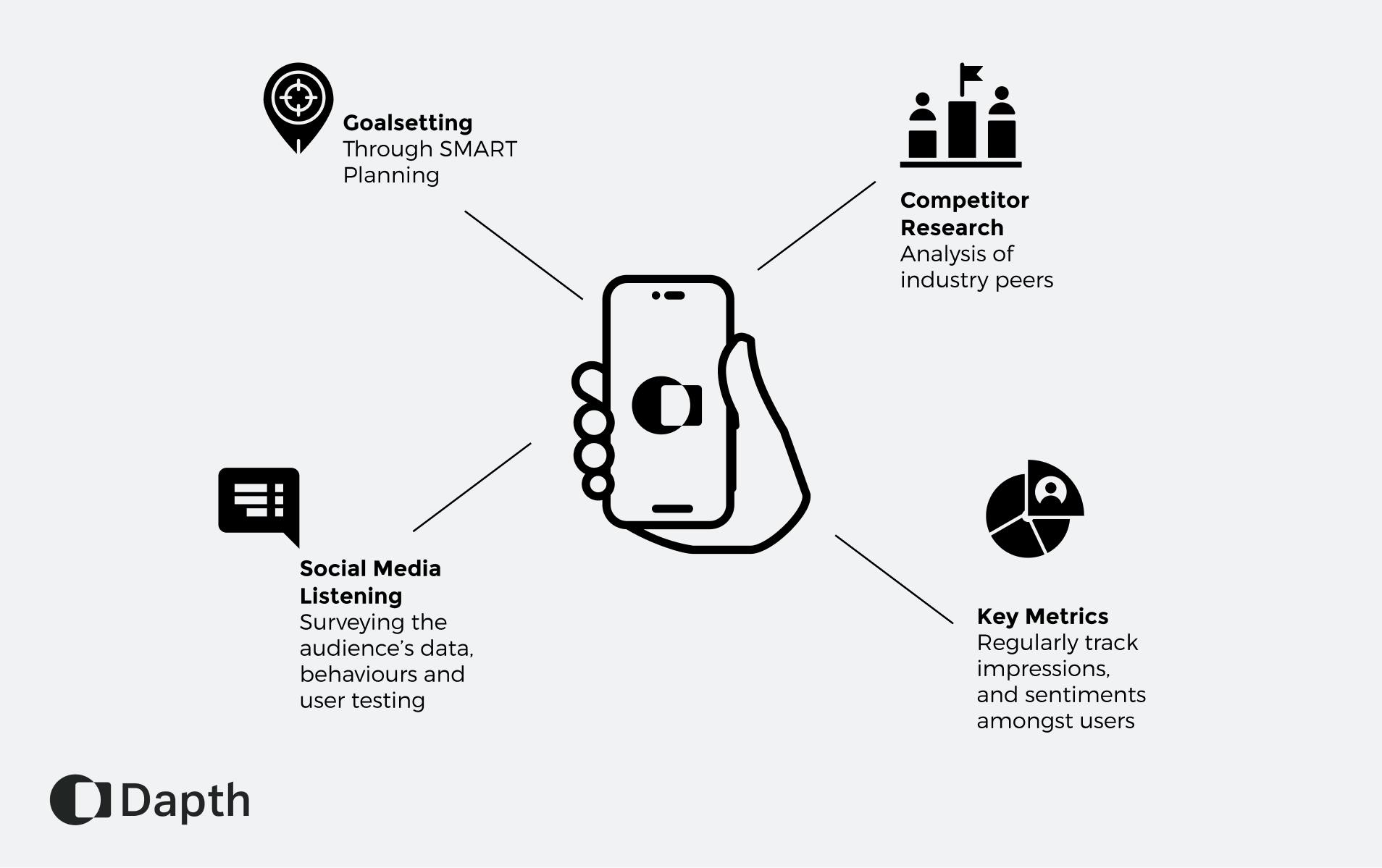
Goal setting and research are highly foundational to a robust strategy. They start with establishing the goals you will work towards. SMART goals are usually important here (specific, measurable, attainable, relevant, and time-bound).
Competitor Research
Competitor research is also essential. Researching the competition can teach you what works and what doesn’t or inspire you when you run into creative blocks. Try to get into your competitor’s mindset. Creating a well-defined content strategy is a fundamental step in any successful social media campaign. It involves a deep understanding of your target audience, and an informed content strategy lays a robust foundation for delivering valuable content.
Key Metrics
Once you have an idea of your average traffic and post-performance, it's good to set goals for key metrics and keep a scorecard to measure your progress. It's essential to track your impressions, representing the number of times your content is displayed on a user's screen. Additionally, it's crucial to monitor the social sentiment surrounding your content.
Social Media Listening
A crucial aspect of a successful social media strategy is social media listening and engaging with your audience. Failing to do so means creating a business strategy with limited information and missing out on valuable insights you can utilise. It's best to start by creating audience personas, collecting real-world data, and researching your competition. The critical steps to building a thriving social media strategy include:
- Establish clear goals for your business.
- Conduct thorough research on your target audience.
- Analyse your competitors.
- Select the appropriate social media platforms.
- Plan your content accordingly.
A social media strategy is a roadmap outlining how to make the most of the social media platforms you opt to use to achieve specific goals and it should also:
- Identify your target audience
- Specify the types of content you will create
- Focus on specific platforms rather than all of them
- Detail how often you’ll post
- Include guidance about engaging with your community
A social media strategy helps you build a solid online presence whilst ensuring social media efforts align with business goals.
What's a practical content mix formula for social media?
Knowing what to post matters as much as knowing where to post it. A content calendar without a mix formula behind it tends to drift toward whatever's easiest to produce that week, usually promotional content, which audiences tune out fast.
A few simple formulas keep the mix balanced:
- The 80-20 rule: 80% of content informs, educates, or entertains your audience; only 20% directly promotes your brand.
- The 50-30-20 rule: 50% value-driven content for your audience, 30% curated or shared content from your industry, 20% direct promotion.
- The rule of thirds: one-third promotes your business, one-third shares ideas from others in your industry, one-third is personal interaction with your audience.
None of these formulas is objectively correct, they're starting points. What matters is picking one, applying it consistently across your content calendar, and checking your actual published mix against it periodically. Without a formula, "we'll balance it out" almost never happens in practice, the easiest content to produce quietly takes over the calendar.

Developing a Social Media Plan
Define Objectives
Before starting social media marketing, clearly defining the objectives or goals is essential. These objectives should be in line with overall business goals. Typical objectives include increasing brand awareness, driving website traffic, generating leads or sales, enhancing customer engagement, and showcasing expertise.
Identify Target Audience
Gain a deeper understanding of your target audience's demographics, interests, behaviours, and preferences to guide your content creation and platform selection. Use in-app or third-party analysis tools to analyse your audience and post-performance.
Select Platforms
It’s crucial to choose the social media platforms most relevant to your:
- Organisation
- Industry
- Objectives
- Target audience
Create a Content Strategy
Explore relevant themes and develop an appropriate strategy that strongly resonates with the audience and aligns with the brand which determines the type of content (and develop a content calendar).
Establish Success Metrics
Define success metrics (or KPIs) to measure the success of your social media efforts, such as engagement rate, reach or sentiment analysis.
Monitor and Optimise
Monitoring and analysing social media against established KPIs is crucial to track performance accurately.

Implementing Social Media Campaigns
Messaging and tone of voice guidelines are essential to building your brand identity and maintaining consistency across social media. It’s important to deeply understand your brand’s values/mission/personality, and target audience.
It's essential to identify key messages needed to convey through social channels, with paid and organic approaches equally crucial to implementing social media campaigns. Tailoring the message to fit the chosen platform while promoting it across multiple platforms is necessary. By consistently sharing the same message across your campaign, your followers will hear the same information repeatedly allowing for clear retention of your brand message. It's also crucial to create content for the audience you want - not just the one you already have. Of course, algorithms display content to people who already follow you. However, the algorithms show content to people who do not follow you (yet).
Organic vs Paid
Examples of organic social media activities include:
- Posting content regularly without boosting or sponsoring posts.
- Encouraging employees to share company content with personal networks (this is also known as employee advocacy).
- Responding to comments and direct messages from followers in a timely and genuine manner.
- Sharing user-generated content and fostering community engagement and involvement.
Organic social establishes brand personality and voice, builds relationships through sharing informative, entertaining, and inspiring content, engages customers at every stage of the buying journey, and supports customers with customer service. In summary, an organic social media strategy nurtures relationships with customers/audiences. It helps you establish and grow your brand’s presence where people are already, support and retain customers you already have, and convert new customers by showing them what you’re about.
Working with Influencers
Social media campaigns have become an essential part of marketing strategies. With their significant reach, ability to directly engage with followers and customers, ease of content sharing and budget-friendliness, campaigns appeal to businesses and consumers and are going nowhere soon.
When used as a part of a hybrid social strategy, influencer marketing can be powerful and can greatly amplify a brand's messaging and reach. However, it's crucial to find an influencer that aligns with your brand values and resonates with your audience. There are two types of influencers, macro and micro, each suitable for different social needs.
Micro-influencers generally have a smaller follower count, usually ranging from 10k-100k.
To maximise your brand advocates, encourage employees to share company updates and customers to share User-Generated Content (UGC) and testimonials. This helps showcase real-life experiences with your brand.
How is AI changing social media strategy?
AI has moved from a novelty to a genuine part of the social media toolkit in the past two years, and ignoring it entirely is now more of a strategic gap than a safe choice.
Used well, AI speeds up the parts of social media management that used to eat the most time: drafting first-pass captions, generating content variations for A/B testing, summarising sentiment across hundreds of comments, and scheduling posts around when an audience is actually online. None of that replaces a genuine content strategy, it just removes the repetitive groundwork around executing one.
Used carelessly, AI-generated social content is easy to spot, and audiences are increasingly quick to call it out. Content that reads as generic or overly polished loses the authenticity that makes social media work in the first place. The businesses getting real value from AI in social media are using it to support a strategy a human has already defined, not to generate the strategy itself.
That distinction matters more broadly too. Research shows roughly 95% of enterprise AI pilots deliver no measurable impact on profit and loss, and social media is no exception: AI tools bolted onto a directionless posting schedule won't produce a strategy any more than a directionless posting schedule already had one. Dapth's AI Enablement work looks at exactly this: where AI genuinely speeds up a marketing operation, and where it's better left out.
Measuring and Analysing Results
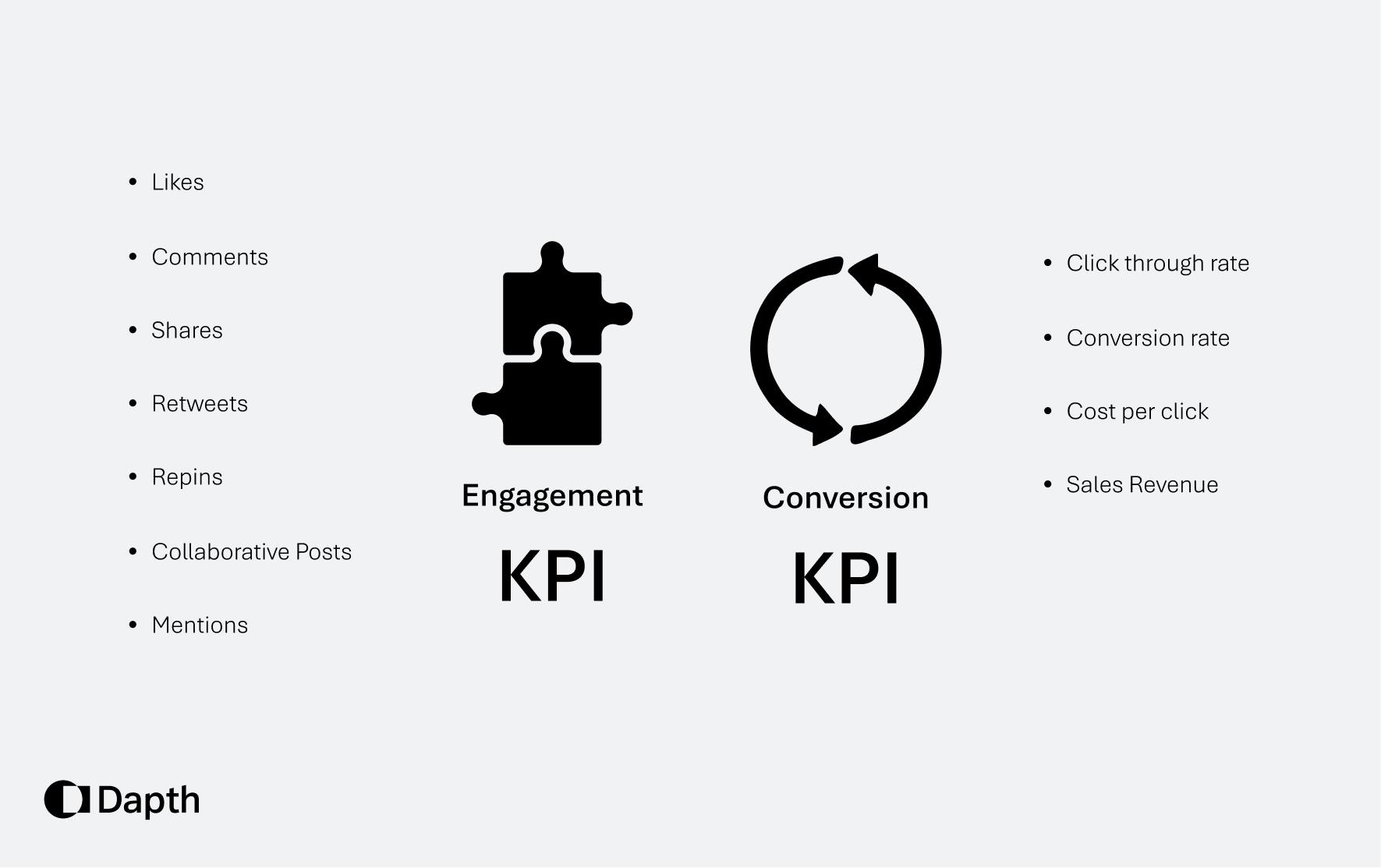
Although it can be difficult to only focus on a single KPI as the most important, engagement KPIs are the most critical metric for understanding how content is performing and being received by followers.
‘Engagement’ based KPIs include
- Likes
- Comments
- Shares
- Retweets
- Repins
- Collaborative Posts
- Mentions
In comparison, conversion-based KPIs include:
- Click-through rate (CTR) - a percentage of people who clicked a link in your post compared to total number of people who viewed the post. It identifies which content is most effective in driving traffic to your content, landing pages, other important destinations. High CTR means a compelling message to your audience.
- Conversion rate - this is percentage of users performing desired action after interacting with social media post or ad. It’s calculated by dividing the conversions (from signing up for a newsletter to purchasing). A high conversion rate points to effectiveness in driving users to take action and helps you measure the impact of your social media efforts, in relation to achieving business goals such as generating leads or making sales.
- Cost Per Click - this is a fee paid to an ad platform every time someone clicks on your ad, this metric is valuable if you are running paid social ads as there is no advertising cost for organic posts.
- Sales Revenue - the total revenue attributed to social media marketing efforts. It's determined by tracking sales from social media channels and demonstrating social media effort's financial impact.
Tracking social media KPIs can be completed through either built-in or third-party analytics tools. Built-in equates to the native analytics platforms provided by each social media platform, offering data about your profile, posts, and audience.
Challenges and Solutions
There are several common challenges faced when creating and executing social media strategies. Having a social media presence without a strategy can lead to disorganised content. Making an impact requires more than having a social presence. However, when you have a well thought-out strategy, every aspect of your social media can align with your business (and) marketing goals. This allows for a cohesive, practical approach - where everything works together towards a common goal.
Adapting to Platform Dynamics
In today's digitally driven world, social media platforms are constantly evolving. As a result, it is essential to keep up with the latest trends and updates to ensure that your social media efforts are practical. To do this, one must understand the behaviour of social media users and how they interact with these platforms.
This includes being aware of the latest algorithm trends, as they can significantly impact the visibility of your content. Additionally, keeping track of platform trends and new features is critical to staying ahead of the game. By adapting to social media's evolving dynamics, you can effectively align your social media efforts with the latest trends, ensuring that you reach your audience in the most effective way possible.

Frequently asked questions
How often should a business post on social media?
It depends heavily on the platform and the audience, not a fixed universal number. As a general guide, one to two posts a day works for Instagram and Facebook, while X and LinkedIn can support more frequent posting without feeling excessive. Consistency matters more than volume: a business posting three times a week reliably will usually outperform one that posts daily for a month and then goes silent.
Should a small business be on every social media platform?
No. Trying to maintain a genuine presence on every platform usually produces a weak presence on all of them. Most small businesses get better results focusing on two or three platforms where their specific audience actually spends time, and doing those well, rather than spreading thin content across five or six accounts.
How do you know if a social media strategy is actually working?
Track metrics tied to your actual goals, not just likes and follower counts. If the goal is brand awareness, reach and impressions matter most. If the goal is lead generation, click-through rate and conversion rate matter far more than engagement alone. A strategy with high engagement but no movement on the metric it was actually built to improve isn't working, regardless of how good the vanity numbers look.
The Takeaway
A robust social media strategy, a strong brand, and a well-oiled customer experience are invaluable to marketing and organisational success and are key components of a successful marketing plan. A social media strategy can help:
- Build brand reputation and loyalty
- Inform better competitive positioning
- Create a more customer-centric business strategy
- Support improved public relations outcomes
- Play a role in crisis management
- Introduce you to products and services to customers looking to buy
- Help you grow awareness, boost traffic and win customers.
It also allows businesses to engage an audience, generate leads, gain marketplace insights, improve SEO, and increase traffic. If you’re a business looking to begin your strategic social media planning journey, consider investing time and resources in it. You may be surprised how it will lead to sustainable growth and audience engagement.
If you're navigating the complexities of creating a social media strategy and seeking expert guidance in Perth, talk to the professionals at Dapth. We specialise in crafting a unique social media strategy that aligns with your business needs. Whether you're just creating or looking to refine your existing social media strategies, our team of experts can help you harness social media's full potential.
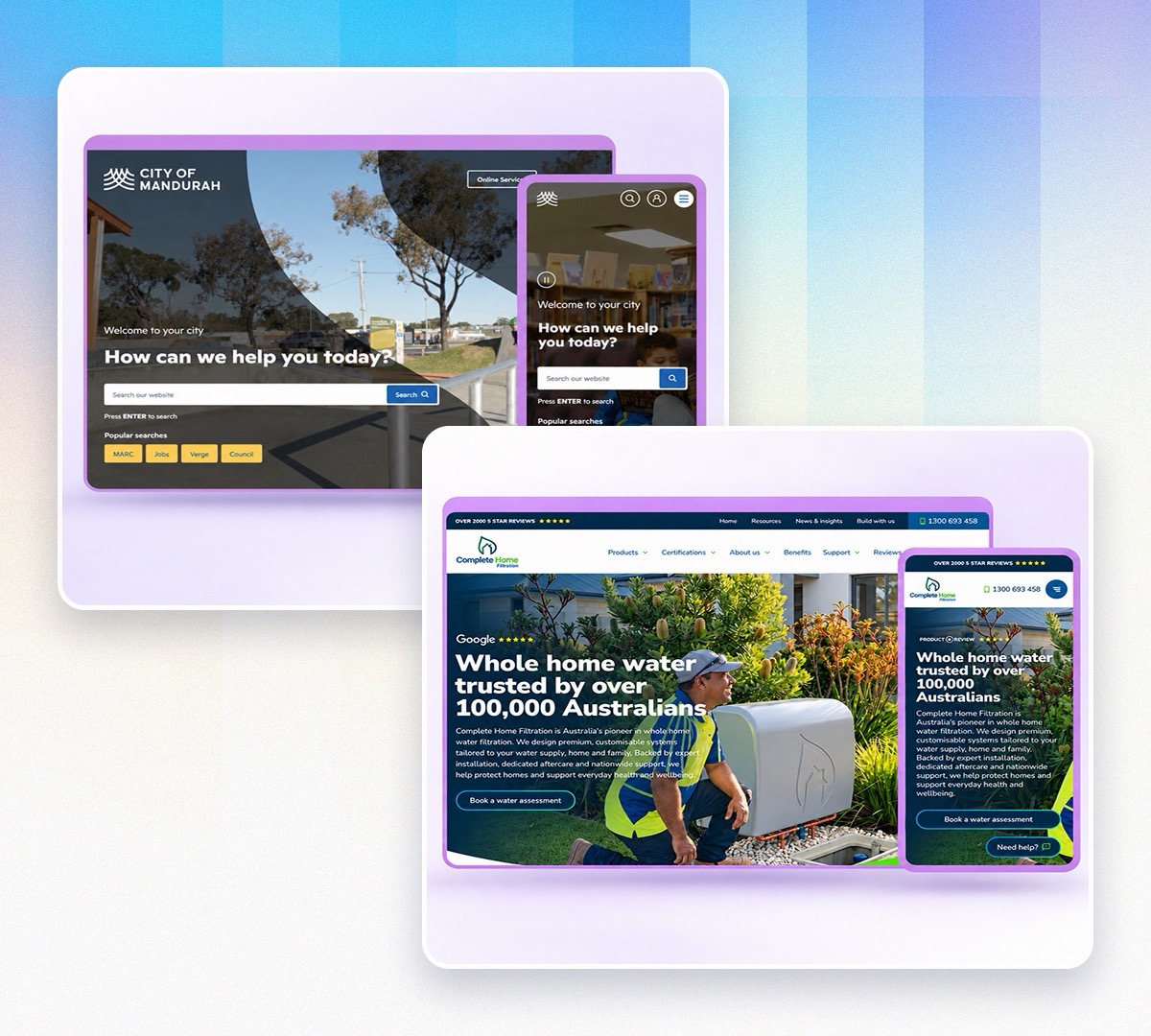
Building or refreshing a social media strategy and want it connected to a website and systems that can actually convert the traffic it drives? Dapth's team can help you close that gap.
Talk to Dapth about your social media strategyAuthor


-Large.jpeg)


_web.webp)
-Large.jpeg)

-Large.jpeg)

-Large.jpeg)
-Large.jpeg)

-Large.jpeg)

-Large.jpeg)
_web.webp)