Operational Systems · AI search
Get found, then be ready
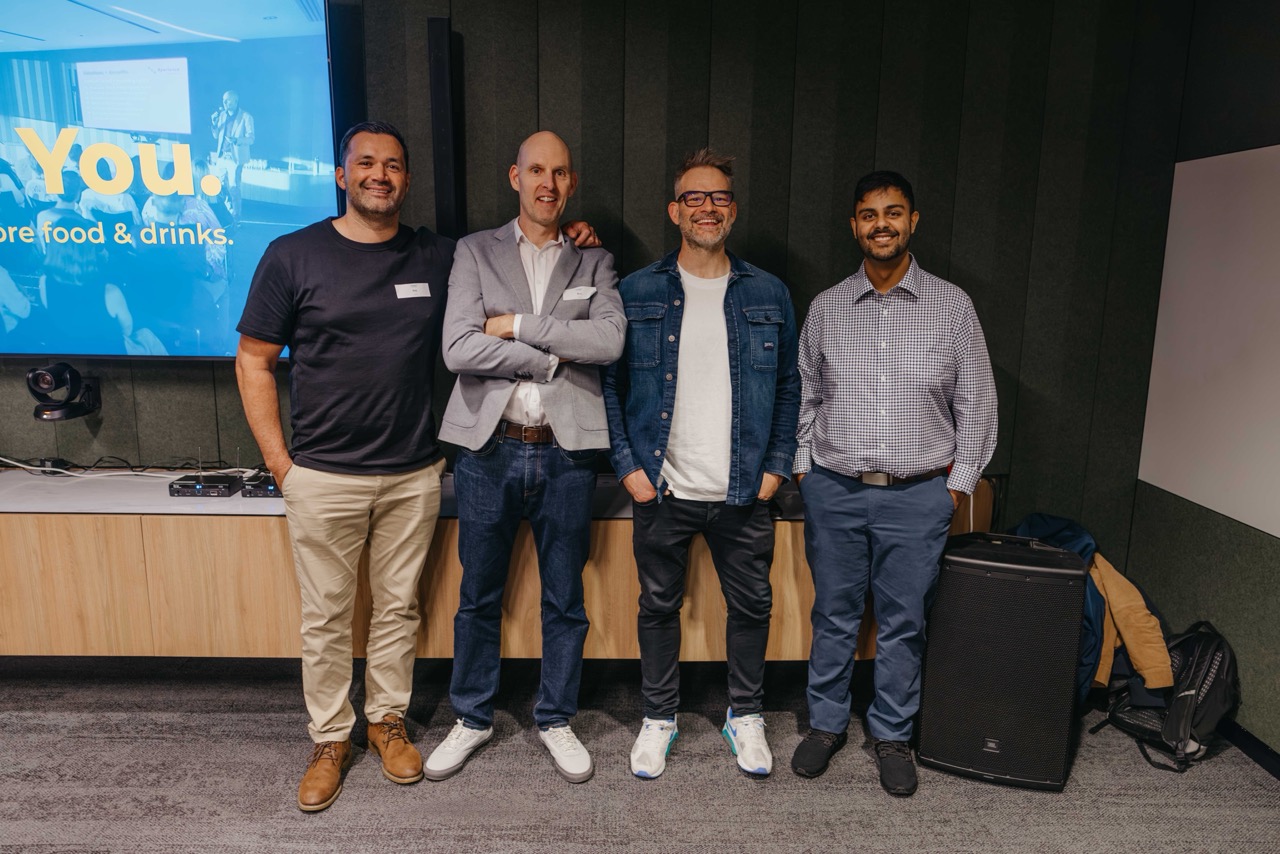
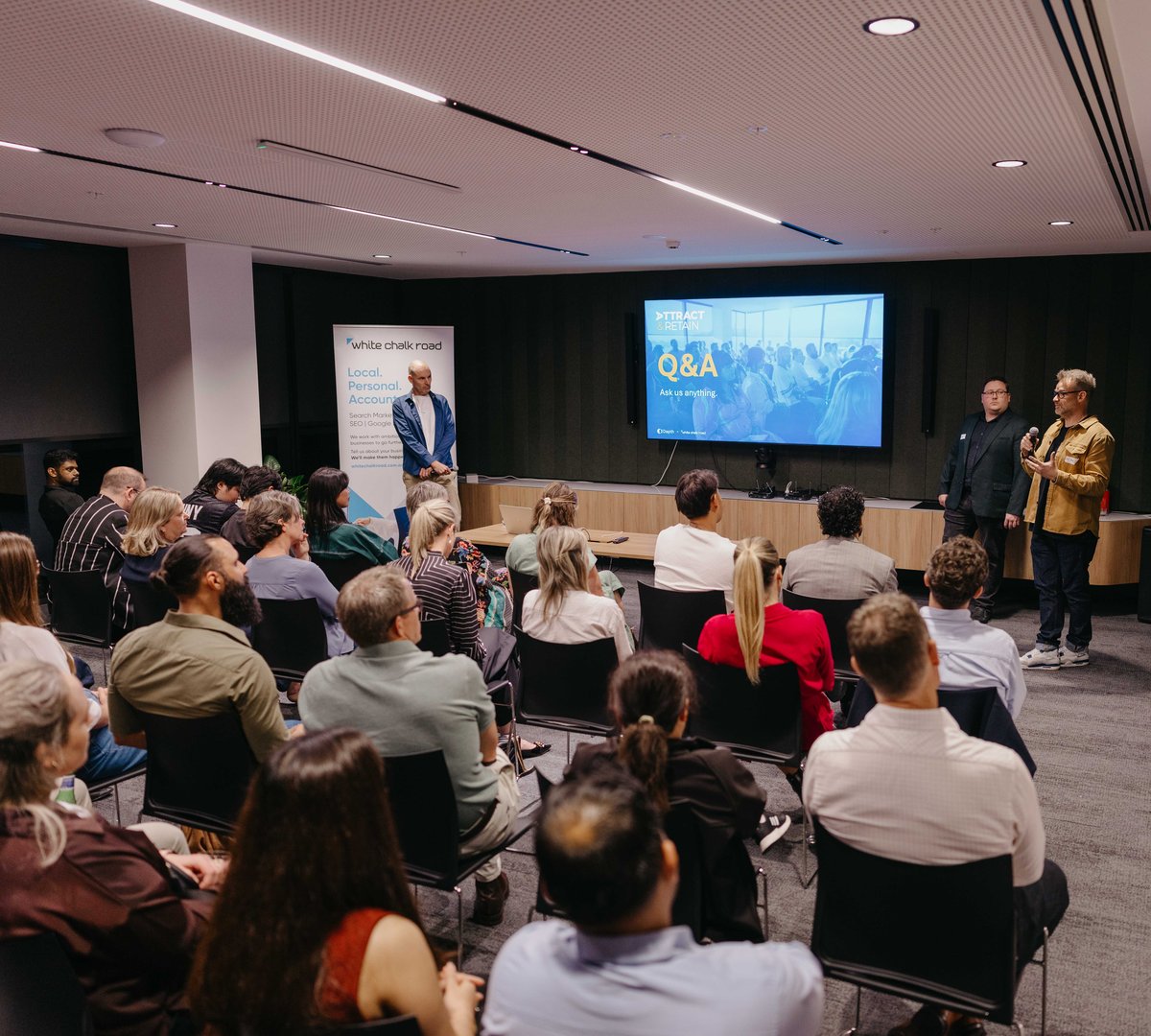
If you run a business, your customers are now asking AI who to choose, and many decide before they reach your website. Generative engine optimisation (GEO) is the work of being seen, trusted and cited in those AI answers. It builds on good SEO, but better search alone won't fix a business that runs on disconnected systems. AI recommends you based on the facts about your business, what customers say about you and what you can show is working. All three depend on the systems behind your business. If your sales, jobs and finance sit in separate tools, that information is hard to keep accurate and harder to use. We covered both sides at the third and final Attract & Retain event of 2026, held at Westralia Square in Perth on 29 October, with White Chalk Road on search and Dapth on systems. This article explains what GEO is, how it works, and what to fix first.
Key takeaways
- Generative engine optimisation is the work of being seen, trusted and cited in AI answers. Good SEO is still the foundation.
- SparkToro and Similarweb data shows 68% of US Google searches ended without a click to any website in early 2026.
- Telsyte's 2026 study found 17.4 million Australians use AI, which is 77% of people aged 16 and over.
- AI recommends businesses using facts, reviews and evidence, so disconnected systems limit what it can say about you.
- One connected system means you capture information once and use it everywhere, for search and for running the business.
In this article
- What is generative engine optimisation?
- How does generative engine optimisation work?
- How is AI search changing SEO in 2026?
- Why does AI search depend on your business systems?
- Why do businesses end up with so many apps?
- What are the challenges of using multiple disconnected software systems?
- What does an ERP system look like in practice?
- What are the benefits of an ERP system?
- What are your options for connecting business systems?
- Is an ERP good for small business?
- How do you choose and build the right system?
- What should you fix first?
What is generative engine optimisation?
Generative engine optimisation is the practice of making your business easy for AI tools to find, understand and recommend. It is also called AI search optimisation. The tools include ChatGPT, Gemini, Copilot and Google's AI Overviews and AI Mode.
Alex Hamilton, Strategy Director at White Chalk Road separated the two simply at Attract & Retain: SEO gets you found, GEO gets you chosen. White Chalk Road has been doing search since 1999, and its view is that around 80% of good SEO is also good GEO. Generative engines build their answers from indexed, trusted content, so GEO extends SEO rather than replacing it.
How does generative engine optimisation work?
AI tools read what is published about you, then pull together an answer. They look further than your website, across reviews, forums and other sites, so generative engine optimisation works on all of those sources. The aim is to be named when someone asks a question that your business should answer.
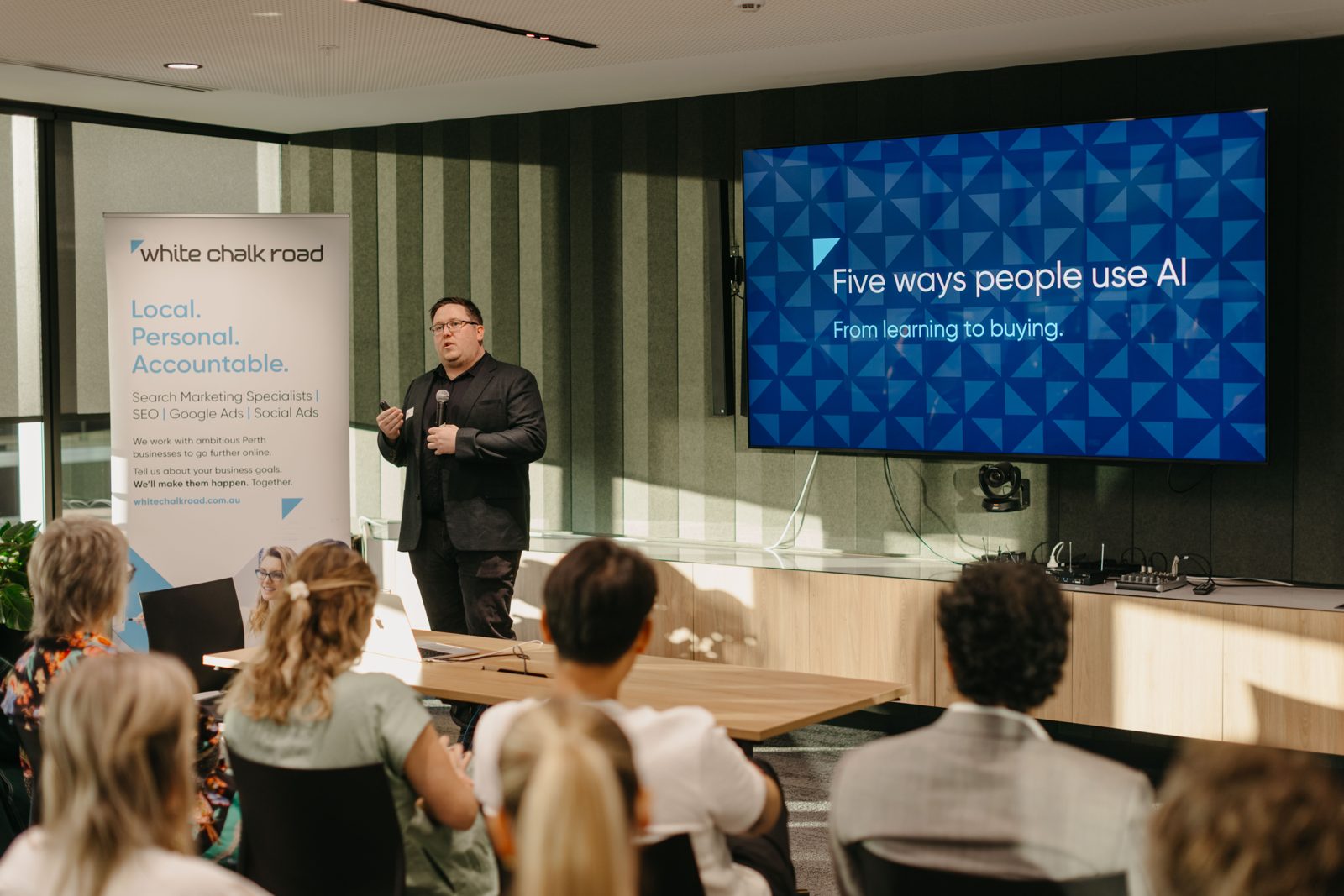
People use AI in five main ways: to learn about a topic, compare options, check a brand, find someone to enquire with, and act, such as booking or buying. Each one is a chance to be mentioned or missed. Questions are also longer. Alphabet reports AI Mode searches average 12 words, about three times a classic search, so the question itself carries the detail. A buyer no longer types 'accountant Perth'. They ask which accountant suits a small builder.
Your website platform can help here too. We run dapth.com on Xperience by Kentico, which includes an SEO & GEO Specialist agent. Kentico says it reviews any page for traditional search and AI-driven discovery, and recommends fixes based on SEO best practices and AI readability standards. We have written more about what Kentico's AI marketing suite actually does.
How is AI search changing SEO in 2026?
AI search is moving the decision to before the click. Searches have become answers, clicks have become citations and rankings have become recommendations. Google still holds about 90% of search engine market share, but the page looks different, with an AI answer often sitting above the links.
That has three effects on any business. First, what AI says about you is now your first impression. Second, specific questions need specific facts, and AI picks whoever fits. Third, you may see fewer visits, but better ones. Adobe Analytics reported AI traffic to US retail sites converted 60% better than other traffic in July 2026. That is retail data, so treat it as a direction, not a forecast.
Why does AI search depend on your business systems?
Search is the front door. Systems are the house. Three things sit behind every AI answer about you: the data the world can find, the reviews customers leave, and the tracking that shows what is working. Each one is harder when your systems don't talk to each other.
Your service areas, project history and pricing go out of date when they live in someone's spreadsheet. Reviews slip when jobs and customer follow-ups aren't tracked. And it is hard to see what marketing is working when enquiries and revenue sit in different tools. There is a simpler cost too: if more enquiries arrive and nobody follows them up, the search work is wasted.
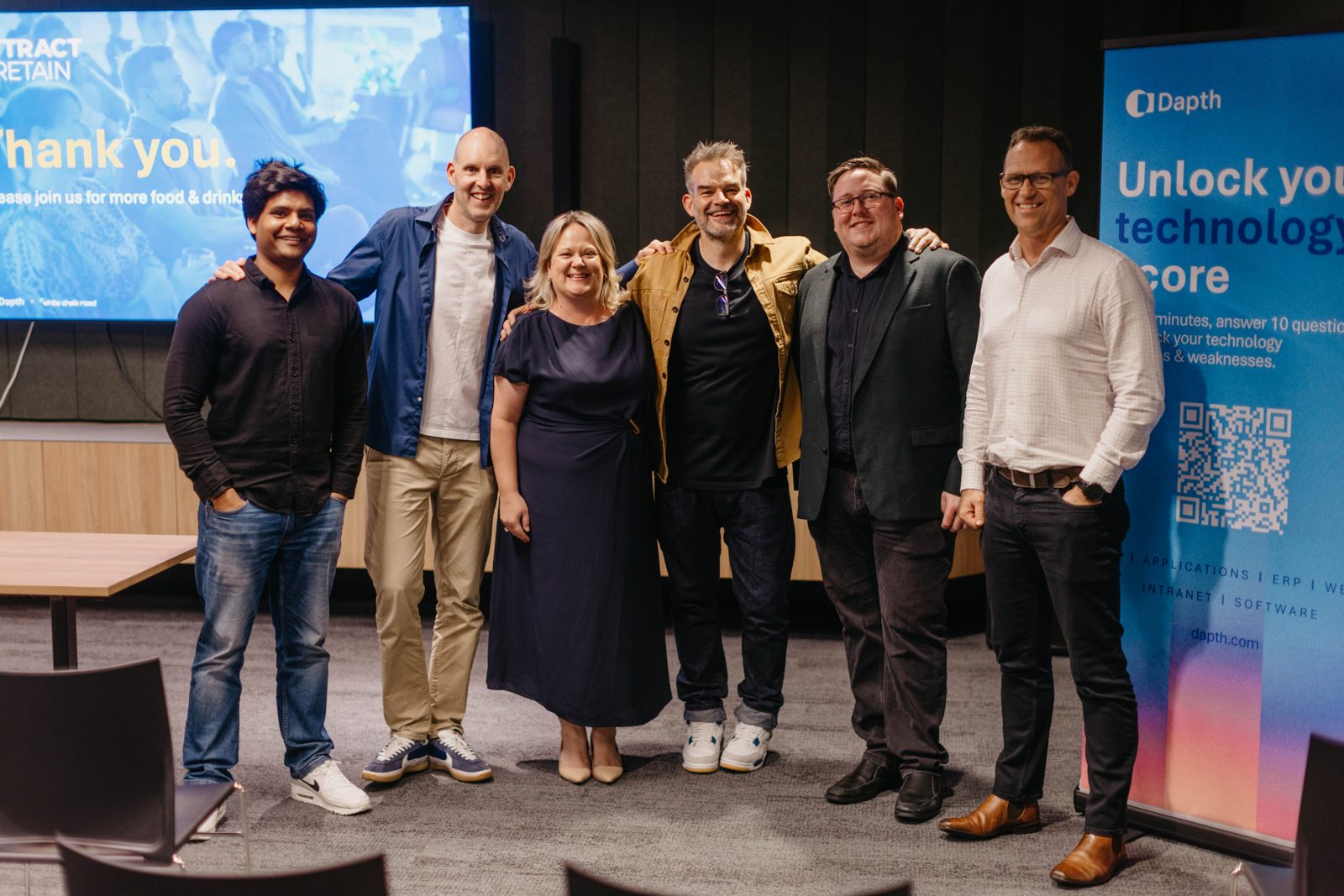
"It was great to partner with Dapth on Attract & Retain. I covered how AI is changing the way customers search for and compare businesses, and what that means for how you show up. Ben then picked up what happens behind that, because getting found only goes so far if the systems aren't there to follow up every enquiry. Having the marketing side and the workflow side in one room made for really in-depth conversations afterwards, and that's why it works so well for our shared clients." Alex Hamilton, Strategy Director, White Chalk Road
Before the event, Ben and Alex sat down to talk through what they were seeing with clients. Watch their conversation on LinkedIn.
Why do businesses end up with so many apps?
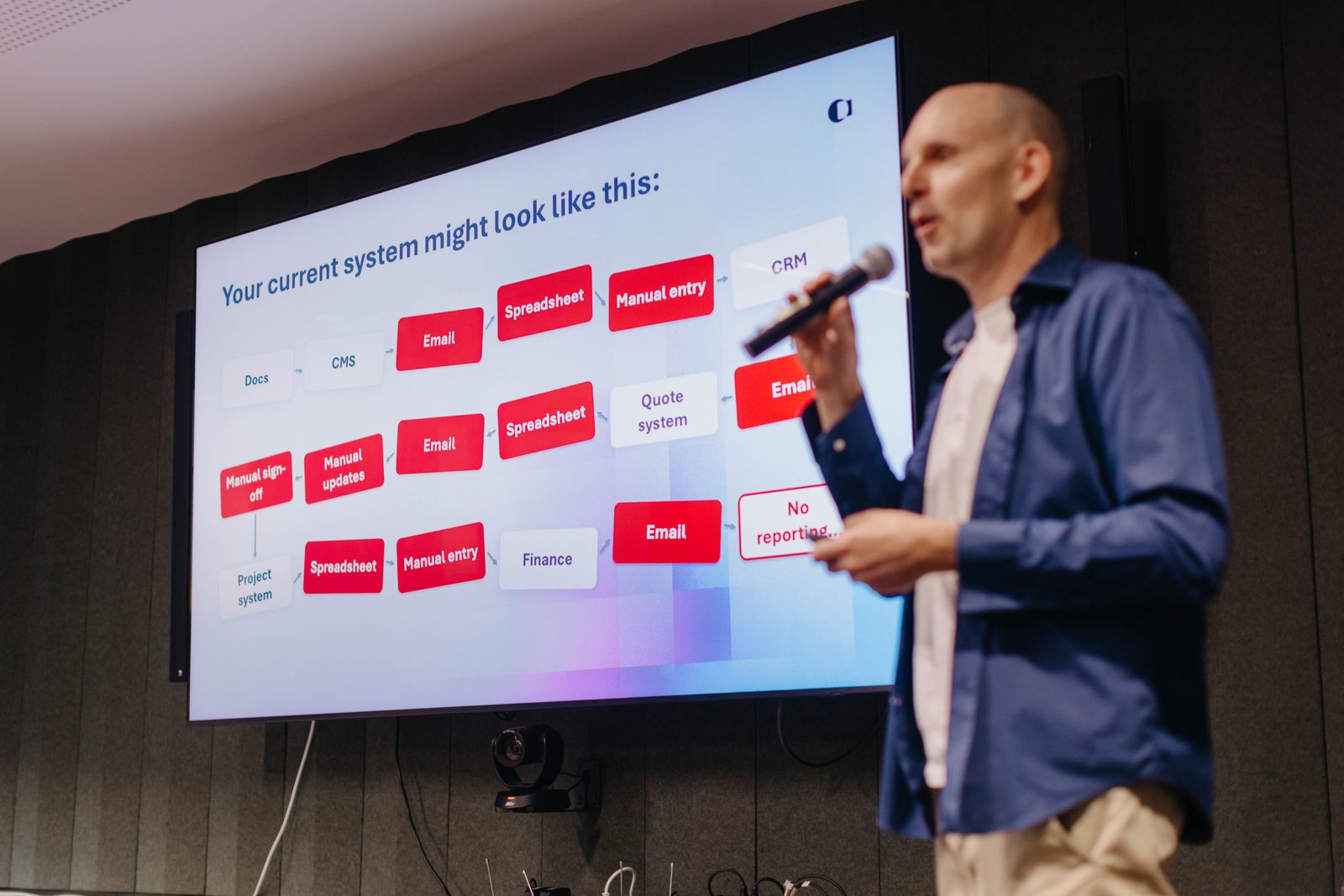
Nobody plans a messy system. It builds up over ten years or more, one sensible decision at a time. Sales needs a CRM, so you add HubSpot or Salesforce. Finance runs on Xero or MYOB. Projects go into Trello or Asana, files into Dropbox, and conversations into Slack, Gmail and WhatsApp. Then come the spreadsheets that fill every gap: Quotes_FINAL.xlsx, Jobs v3.xlsx, Timesheets.xlsx, Stock count.xlsx. Somewhere, there may still be paper job cards.
Each tool solved a real problem on the day you bought it. Together, they create a new one, because nothing connects them except people. Your team becomes the integration, copying details from one screen to another and emailing each other to fill the gaps.
This was Ben De Jonge's main point at Attract & Retain: more software is not a better system. It is worth asking whether you are paying for solutions that deliver real value, or just for more expensive complexity and disconnection.
What are the challenges of using multiple disconnected software systems?
The challenges of using multiple disconnected software systems show up in four places. The same information gets entered more than once, which wastes time. Information isn't shared or centralised, so nobody has live, accurate data. Manual processes and spreadsheets create errors that affect teams and customers. And high platform fees and maintenance costs keep rising, for a system that is still a compromise.
| Who it affects | What disconnection looks like |
|---|---|
| Your people | Repetitive admin, double handling, more training and reliance on what one person knows |
| Your business | Inefficiency, higher labour costs, more software licences, poor reporting and difficulty scaling |
| Your customers | Slow responses, inconsistent information, errors and poor visibility of their job |
"When I say the words disconnected systems to clients, they really sit up and start nodding, because it's such a common pain point. They've added software over three, six, ten years, and most of it doesn't talk to each other. The fit has to be right." Ben De Jonge, Head of Brand and Growth, Dapth
We have written more about this in our article on disconnected digital systems.
Not sure how disconnected your business is? Answer 10 questions in about 3 minutes and get your own report of scores and opportunities.
Take the free assessmentWhat does an ERP system look like in practice?
Here is a common ERP system example, starting with what happens without one. A customer signs off a project. Sales enters it, then someone emails operations, operations checks availability and someone updates a spreadsheet. The project manager assigns people, purchasing places an order, someone emails the client, finance creates the first invoice, someone reconciles the payment, and management waits for a report. Every step adds delay, duplication, errors and cost.
In one connected system, that same flow runs from website to enquiry, CRM, sales, quoting, project, operations, delivery, finance and reporting. You enter the details once and every team works from the same information.
What are the benefits of an ERP system?
The benefits of an ERP system, or any well-connected set of business systems, come down to one thing: everyone works from the same information.
- Less time on admin, because work is entered once and repetitive steps are automated.
- Fewer errors, because details aren't retyped between teams.
- One set of numbers, so decisions don't wait for a monthly report.
- Faster, more consistent answers for customers.
- Room to grow without adding another system each time.
This is why business systems integration is important. It is the work of connecting your software so information flows between tools. You can do that by integrating the systems you keep, moving to one platform, or a mix of both. The right answer depends on how your business runs.
What are your options for connecting business systems?
There is no single right answer, and you don't have to rip everything out. Ben walked through four broad routes:
| Option | What it means |
|---|---|
| Enterprise-level ERP | A large platform built for big, complex organisations |
| Effectively integrated systems | Keeping the tools that work and connecting them properly |
| Custom solutions | Software built around a process that is unique to your business |
| Flexible operational systems | One configurable platform that runs several functions, such as Odoo |
Is an ERP good for small business?
Yes, an ERP for small business can work well, as long as you choose it for how you actually operate. The advice from Ben De Jonge at Attract & Retain was plain: don't choose a system based on the dream, the power or enterprise-level features. Choose one that is accessible, affordable and functional for your business.
For operational systems, Dapth uses and recommends Odoo. Odoo is a set of connected business apps on a single database, covering areas like CRM, sales, projects, stock, accounting and HR. You can start with what you need and switch on more as you grow. One of our clients, Green Genie Earthworks, brought more than five back-office platforms into one Odoo system.
| Business problem | How one connected platform helps |
|---|---|
| Disconnected systems | Connected applications |
| Duplicate data | One shared database |
| Manual processes | Automated workflows |
| Poor data visibility | Dashboards and reporting |
| Multiple software bills | One consolidated platform |
| Scattered customer information | Centralised customer data |
| Manual finance processes | Integrated accounting |
How do you choose and build the right system?
The software matters less than how well it fits the way you work. Ben's message was to build technology on understanding, using the same steps for every platform:
- Understand the business, its processes, challenges and objectives.
- Assess the options and opportunities.
- Design the processes the system needs to run.
- Build the system.
- Connect it with the systems you are keeping.
- Automate unnecessary manual work.
- Test it with your real users.
- Keep improving it as the business changes.
What should you fix first?
- Ask AI about your business. Try ChatGPT, Gemini and Google's AI Mode, and note what each says. The same question often gets different answers.
- Check your facts. Make sure your services, locations and proof are clear and current on your website.
- Look at your reviews, because AI reads what customers say about you, not only what you say.
- Trace one enquiry from first contact to final invoice, and count how many times someone retypes the details.
- Assess your business. The free Digital Advantage Assessment scores where you stand today and shows where the biggest improvements are, so you can decide what to connect first.
If that trace shows the same details being typed again and again, see how one system could run your whole business. Our ERP and operations team starts with how your business works, not with the software. If you would rather talk it through, book a free 90-minute strategy session with Phil Allen and the team. Bring the people who run sales, operations and finance, and you will leave with a clear picture of what one connected system could change.
About Dapth
Dapth is your Perth digital consultancy, building connected digital systems from websites and intranets to applications, software, ERP and AI tools. For more than 15 years we have helped WA businesses, government agencies and organisations unlock advantages like streamlined workflows, increased efficiency, cost savings, new revenue and more powerful marketing.
We start with your organisation, not the technology: your users, your operations and your objectives. Then we connect everything across four areas:
- Digital Consultancy: Digital strategy, service design and UI and UX design that map how your customers, people and systems should work together, before anything is built.
- Customer Experience: Websites and digital experience platforms on Xperience by Kentico (Kentico Gold Partner), Sitefinity, Umbraco and Payload CMS, plus ecommerce.
- Employee Experience: Intranets and employee portals on Microsoft SharePoint, and workflow automation that takes the double handling out of everyday work.
- Operational Systems: ERP with Odoo as our primary platform (we are an Odoo partner), plus custom software, apps and the integrations that connect them.
Author